
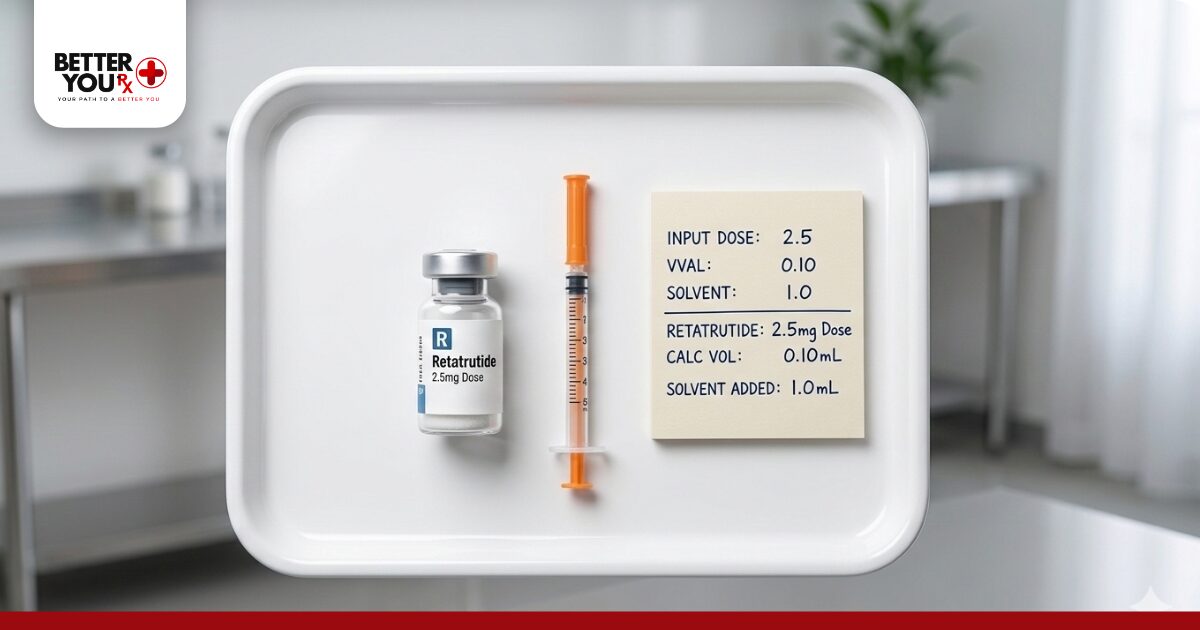
Peptide procurement decisions frequently hinge on format availability. Researchers entering the sourcing process for newer investigational compounds often find that size and concentration options vary more widely across vendors than with established catalogue peptides. Format selection affects reconstitution planning, storage duration, dosing precision, and overall study budgeting across a research period. Read the full guide for detailed context on how format decisions intersect with procurement planning for this compound specifically. Vial sizes currently listed across active research suppliers range from smaller two-milligram formats suited to short protocols, up to larger sixty-milligram options designed for extended or multi-phase study designs. Concentration figures vary alongside these size options, making independent verification of each listing essential before any order is finalised.
Common vial sizes across suppliers
Most active research suppliers list this compound across several size tiers. Smaller formats appear most frequently for buyers entering the category for the first time or running short verification protocols before committing to larger orders. Commonly listed vial sizes include:
- 2mg – suited for initial verification and short study windows
- 5mg – most frequently ordered across general research applications
- 10mg – standard for mid-length protocols requiring consistent batch sourcing
- 20mg – used in extended study designs with higher administration frequency
- 30mg and above – available through select vendors for volume research needs
Availability across these tiers is not uniform. Smaller formats tend to stay in stock more consistently, while larger options sometimes carry longer lead times tied to batch production cycles.
Concentration figures and purity benchmarks
Concentration data across research listings varies depending on supplier production standards and reconstitution guidance. Most reputable vendors publish purity figures alongside size listings rather than separately, allowing buyers to assess both format and quality within a single product page review.
Purity benchmarks observed across active supplier catalogues generally fall into two tiers. Standard research-grade listings confirm purity at 95% or above, verified through HPLC testing. Higher-grade listings from more established vendors cite figures at 98% or above, often confirmed through both HPLC and mass spectrometry independently. Batch-specific certificates distinguish legitimate listings from those relying on generic or outdated documentation.
Buyers comparing concentration data across multiple vendors should request lot-specific reports rather than accepting catalogue-level purity claims. A stated figure without a named independent lab and matching batch number carries a limited verification value regardless of how prominently it appears on a product page.
Format selection and study planning
Vial size selection connects directly to how a research protocol gets structured over time. A buyer running a four-week study with defined administration points needs a different format than one sourcing for a twelve-week multi-phase design. Reconstitution volume relative to vial size affects concentration precision at every administration point, making format choice a research variable rather than just a procurement preference.
Freeze-thaw cycles also factor into format decisions. Larger vials reconstituted partially between uses introduce additional handling complexity that smaller, single-use formats avoid. Lyophilised powder formats across most size tiers remain stable for twelve to twenty-four months under proper cold storage, giving buyers flexibility in timing reorders around batch availability.
Size and concentration options for this compound have expanded as supplier infrastructure matured around growing research demand. Buyers who match format selection to their specific protocol requirements, rather than defaulting to the most available or lowest-priced option, position their sourcing decisions within a more reliable verification and planning framework from the start.