
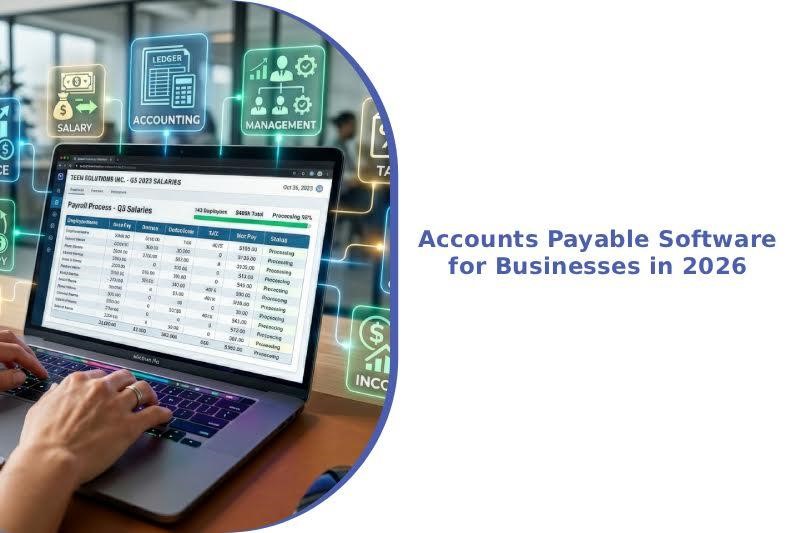
Most finance teams know their accounts payable process is broken. Invoices pile up in inboxes, approvals get stuck waiting on someone who’s in a meeting, and by the time a payment goes out, the vendor has already followed up twice. It’s not a people problem — it’s a process one. In 2026, businesses that are serious about fixing it are turning to accounts payable software, and the shift is less about modernization as a concept and more about stopping specific, expensive headaches.
What the Software Actually Does
At its most basic, accounts payable management software replaces the patchwork of spreadsheets, email threads, and manual data entry that most AP teams have been running on for years. Invoices get captured automatically. Approvals get routed to the right people without someone having to chase them down. Vendor records stay current. And rather than piecing together a picture of outstanding liabilities from three different sources, finance teams can see where things stand in real time.
It’s not glamorous, but that’s the point. The goal isn’t a technology transformation — it’s fewer errors, fewer late payments, and fewer hours spent on things a system can handle.
The Real Cost of Doing It Manually
Delayed approvals are probably the most visible problem, but they’re not the only one. Manual data entry means duplicate payments happen more often than anyone wants to admit. Finance leaders end up managing cash flow reactively because they can’t get a clean picture of what’s owed until it’s almost due. And every one of these issues has a cost — whether it’s a late payment penalty, a strained vendor relationship, or just the time a team member spends reconciling something that shouldn’t need reconciling.
What Modern AP Tools Actually Offer
The features that matter in a good AP automation software setup tend to be practical ones: OCR and AI that pull invoice data without manual entry, approval workflows that move quickly instead of sitting idle, and direct integration with whatever ERP the business already runs. Vendor portals are increasingly common too — suppliers can submit invoices and check payment status themselves, which cuts down on inbound queries. Audit trails, real-time dashboards, and exception flagging round things out. Nothing revolutionary, but the combination adds up.
Where AI Is Actually Useful Here
OCR has gotten reliable enough that invoice capture is largely a solved problem. The more interesting development is what happens downstream. AI-driven approval routing can learn from historical patterns and reduce the number of invoices that need human review. Predictive analytics give finance teams a forward-looking view of cash flow rather than just a report of what’s already happened. Automated reconciliation catches mismatches between invoices and purchase orders before they become a bigger issue. Fraud detection is also improving — patterns that would take a human hours to spot can get flagged automatically.
None of this eliminates human judgment. But it does mean the humans in the loop are making decisions about edge cases rather than processing routine transactions.
Picking the Right System
The most common mistake is choosing AP software based on feature lists rather than fit. A solution that works well for a 50-person company may fall apart at 500. Integration matters more than most demos suggest — if the software doesn’t sync cleanly with the existing ERP, the manual workarounds come back fast. Security is non-negotiable given what’s flowing through these systems. And reporting needs to go beyond invoice counts; finance leaders need data that actually informs decisions.
Scalability, integration depth, security posture, reporting quality — these are the things worth pressure-testing before signing anything.
Where MYND Integrated Solutions Fits In
MYND Integrated Solutions works with businesses that are done with manual AP but aren’t sure where to start. Their approach is built around AP automation software that handles invoice management, approval workflows, and compliance tracking in a way that integrates with what companies already have. The focus is on giving finance teams real-time visibility and reducing the operational overhead that comes with running payables at scale.
The Bottom Line
AP automation isn’t a strategic initiative — it’s operational hygiene. The businesses that have moved away from manual processes aren’t doing it to be forward-thinking. They’re doing it because the old way was costing them time, money, and vendor goodwill they couldn’t afford to keep losing. The tools exist, they work, and the ROI is fairly straightforward to calculate. The harder question is usually just: what’s the cost of waiting?